
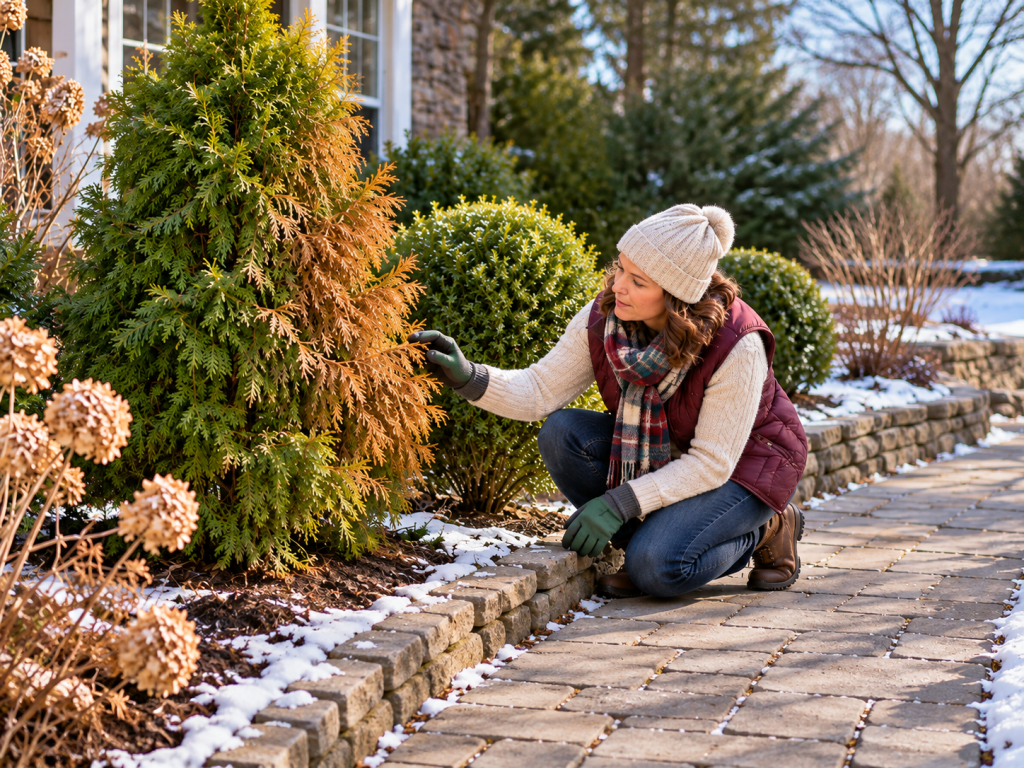
Evergreens are supposed to stay green all year, right? So why do some of them suddenly turn brown when winter rolls around?
If you’ve ever noticed brown needles on your arborvitae, discolored boxwoods, or crispy-looking rhododendron leaves, you might have wondered whether your plants were sick or dying.
Here’s some good news: Brown foliage doesn’t always mean your evergreen has a disease, and it doesn’t necessarily mean the entire plant is dead!
One of the most common causes of winter browning is something called winter burn. Understanding why it happens and how to prevent it can help keep your landscape looking beautiful all year long.
What Is Winter Burn?
Despite its name, winter burn has nothing to do with heat or fire!
Winter burn occurs when evergreen foliage loses more moisture than the plant’s roots can replace.
Unlike deciduous trees that drop their leaves in fall, evergreens retain their needles or leaves throughout winter. Even during cold weather, these plants continue losing small amounts of moisture through their foliage.
The trouble begins when the ground freezes.
Frozen soil prevents roots from absorbing enough water to replace what is being lost. Add bright winter sunshine, freezing temperatures, and drying winds, and the result can be brown, dried-out foliage.
Here in the South Salem area, winter weather can bring plenty of these challenging conditions.
Which Evergreens Are Most Vulnerable?
While nearly any evergreen can experience winter injury, some are more susceptible than others.
Plants to keep an eye on include:
- Arborvitae: Especially newly planted specimens and those growing in exposed, windy locations.
- Boxwoods: Can develop bronze, yellow, or brown foliage after harsh winter weather.
- Rhododendrons: Broad leaves may curl, brown along the edges, or become damaged by winter drying.
- Hollies: Broadleaf varieties may experience leaf scorch in exposed locations.
- Yews: Can develop brown needles, particularly on the sides facing winter sun and wind.
- Pines and Spruces: May show brown needle tips or larger patches of damaged foliage following winter stress.
Newly planted evergreens are especially vulnerable because their root systems haven’t had enough time to become fully established.
How to Recognize Winter Burn
Winter burn doesn’t always show up immediately. Sometimes plants look perfectly healthy throughout December and January, only to develop brown foliage in late winter or early spring.
Common signs include:
- Brown, reddish-brown, or bleached foliage.
- Browning that begins at leaf or needle tips.
- Damage concentrated on the south or southwest side of the plant.
- Greater discoloration on branches exposed to wind and sunlight.
- Healthier foliage on branches protected by snow or nearby structures.
One important clue: Winter burn often affects the outside of a plant more severely than the interior foliage.
However, browning can also result from drought, poor drainage, salt exposure, insects, or disease. The location and pattern of damage can help identify the cause.
Don’t Confuse Winter Burn With Natural Needle Drop
Here’s something that surprises many gardeners!
Evergreens don’t keep every needle forever.
Just like deciduous trees shed their leaves, many needled evergreens naturally lose older foliage as part of their growth cycle.
Pines, arborvitae, and other conifers may develop yellow or brown needles toward the interior of the plant, particularly in fall.
These older needles eventually drop as newer growth continues developing.
If the browning is mostly on older, interior foliage and the outer branches remain healthy and green, it may simply be normal seasonal shedding.
Five Ways to Protect Evergreens From Winter Burn
The best defense against winter damage begins before the coldest weather arrives.
1. Water Before the Ground Freezes
Proper watering is one of the most effective ways to reduce winter burn.
Evergreens need adequate soil moisture heading into winter, especially during a dry autumn.
Check the soil around your trees and shrubs. If it’s dry several inches below the surface, water slowly and deeply so moisture reaches the root zone.
Continue checking moisture until the ground freezes, but avoid overwatering or leaving roots in soggy soil.
Pay special attention to evergreens planted within the last few years.
2. Add a Protective Layer of Mulch
Mulch isn’t just for keeping garden beds looking neat!
A 2 to 3-inch layer of organic mulch can help conserve soil moisture and moderate temperature changes around plant roots.
Shredded bark, wood chips, and other organic mulches are excellent choices.
Spread mulch over the root zone, but keep it a few inches away from trunks and stems to prevent excess moisture buildup and decay.
3. Shield Plants From Winter Wind and Sun
Some evergreen shrubs benefit from a little extra protection when winter weather turns harsh.
Burlap screens can help reduce exposure to drying winds and intense winter sunlight.
Place stakes around vulnerable plants and attach burlap to create a protective barrier on the most exposed sides.
For best results, leave some space between the screen and the foliage rather than tightly wrapping the plant.
This can be especially helpful for young arborvitae, boxwoods, and broadleaf evergreens growing in exposed locations.
4. Avoid Late-Season Fertilizing and Pruning
Fall may seem like a good time to give your evergreens one final boost, but heavy applications of nitrogen fertilizer late in the growing season can encourage tender new growth.
That fresh growth may not have enough time to harden off before freezing weather arrives.
Likewise, heavy pruning late in the season can stimulate vulnerable new growth or expose foliage to additional winter stress.
Save major pruning and fertilizing for the appropriate growing season, based on the type of evergreen you’re caring for.
5. Choose the Right Plant for the Right Location
One of the best long-term ways to prevent winter damage is to select evergreens suited to your local growing conditions.
Consider winter sun exposure, prevailing winds, drainage, and mature plant size before planting.
Some evergreens thrive in protected locations but struggle when planted in open, windy areas.
A little thoughtful planning can make a big difference in how your landscape handles winter!
Can Evergreens Recover From Winter Burn?
If your evergreens develop brown foliage, don’t rush to grab the pruning shears!
Brown needles and leaves generally won’t turn green again, but the plant may still be alive and capable of producing healthy new growth.
Wait until spring, when new growth begins to emerge, before deciding which branches need pruning.
If buds and stems are still alive, new foliage may help fill in damaged areas. However, branches that have died completely will not recover.
Keep affected plants properly watered during dry weather and avoid unnecessary stress while they recover.
If browning continues to spread or the cause isn’t clear, it’s worth having the plant evaluated before making major pruning or replacement decisions.
Keep Your Evergreens Beautiful All Year Long!
Winter can be tough on trees and shrubs, but a little preparation can go a long way toward protecting your landscape.
By keeping evergreens properly watered, mulching their roots, shielding vulnerable plants, and choosing varieties suited to your growing conditions, you can help reduce winter damage and encourage healthier growth next spring.
Have questions about browning evergreens or protecting your landscape from winter weather?
Stop by Copia Home & Garden in South Salem, NY! Our friendly team can help you explore evergreen varieties, find seasonal gardening supplies, and offer advice for keeping your landscape healthy through the changing seasons.
Because evergreens should bring beautiful color to your garden, even when everything else is taking a winter break!

