
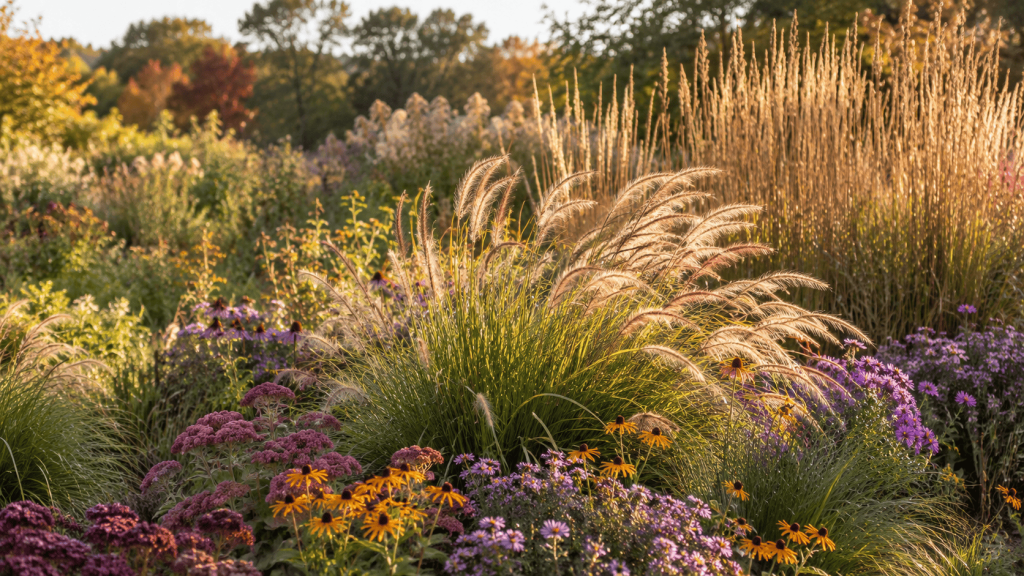
As fall settles into New York, it’s tempting to grab the pruners and clean every perennial bed down to the ground. But a perfectly tidy garden isn’t always the healthiest garden. Some perennials benefit from fall cleanup, while others are better left standing through winter.
Knowing what to cut and what to leave can help protect plants, provide food and shelter for wildlife, and even add beauty to your winter landscape.
Why Leave Some Perennials Standing?
Those dried stems and seed heads may look finished for the season, but they can still serve an important purpose.
Leaving selected perennials standing can:
- Provide seeds for birds
- Create shelter for beneficial insects
- Protect plant crowns during winter
- Add texture and structure to the winter garden
- Provide overwintering habitat for native bees and other insects
You don’t have to leave the entire garden untouched. A combination of selective cleanup and standing plants offers a nice balance.
Perennials You May Want to Leave Standing
Many sturdy perennials provide winter interest and valuable food or habitat.
Consider leaving:
- Coneflowers
- Black-Eyed Susans
- Sedum
- Asters
- Goldenrod
- Ornamental grasses
Seed heads can become natural feeding stations for birds, while hollow or sturdy stems may provide overwintering habitat for insects.
What Should You Cut Back?
Some plants are better candidates for fall cleanup, particularly when foliage is diseased, damaged, or collapsing into a wet mess.
Consider removing:
- Diseased foliage
- Plants affected by serious fungal problems
- Damaged or rotting stems
- Spent annuals
- Plant debris that could harbor disease
Dispose of diseased plant material rather than adding it to a home compost pile.
Don’t Cut Everything to the Ground
Leaving some plant material behind creates a more wildlife-friendly garden.
Instead of cutting every perennial to soil level, concentrate fall cleanup in highly visible areas and remove anything diseased. Leave healthy stems and seed heads standing in other parts of the garden until spring.
It’s less work for you and can be more beneficial for your backyard ecosystem.
Let Ornamental Grasses Shine
Ornamental grasses are especially valuable during fall and winter.
Rather than cutting them down immediately, leave them standing to provide:
- Winter texture
- Movement in the landscape
- Seeds for wildlife
- Shelter for small creatures
Most can be cut back in late winter or early spring before fresh growth begins.
Save Some Cleanup for Spring
There’s no rule saying every garden chore needs to be finished before winter.
Waiting until spring to cut back selected perennials allows stems and seed heads to remain available to wildlife throughout the colder months. When temperatures warm and new growth begins, you can finish your cleanup and prepare beds for another growing season.
Frequently Asked Questions
Should all perennials be cut back in fall?
No. Many healthy perennials can remain standing through winter, particularly those with sturdy stems or seed heads that provide food and habitat.
Should diseased plants be left standing?
Generally, no. Removing diseased foliage and debris can help reduce the chance of problems carrying into the next growing season.
Can I leave coneflower seed heads?
Yes. Coneflower seed heads provide winter interest and can offer a food source for birds.
When should I cut back ornamental grasses?
Ornamental grasses can usually remain standing through winter and be cut back before new growth begins in spring.
Does leaving stems really help insects?
Yes. Some beneficial and native insects use plant stems and garden debris as overwintering habitat.
Visit Us
Not sure what should stay and what should go in your fall garden? Stop by Copia Home & Garden for perennials, fall gardening supplies, and advice to help you prepare your landscape for the changing season.
Copia Home & Garden
475 Smith Ridge Rd South
Salem, NY 10590
Fall Hours
Monday: 8 AM to 5 PM
Tuesday: CLOSED
Wednesday: 8 AM to 5 PM
Thursday: 8 AM to 5 PM
Friday: 8 AM to 5 PM
Saturday: 8 AM to 5 PM
Sunday: 9 AM to 4 PM

